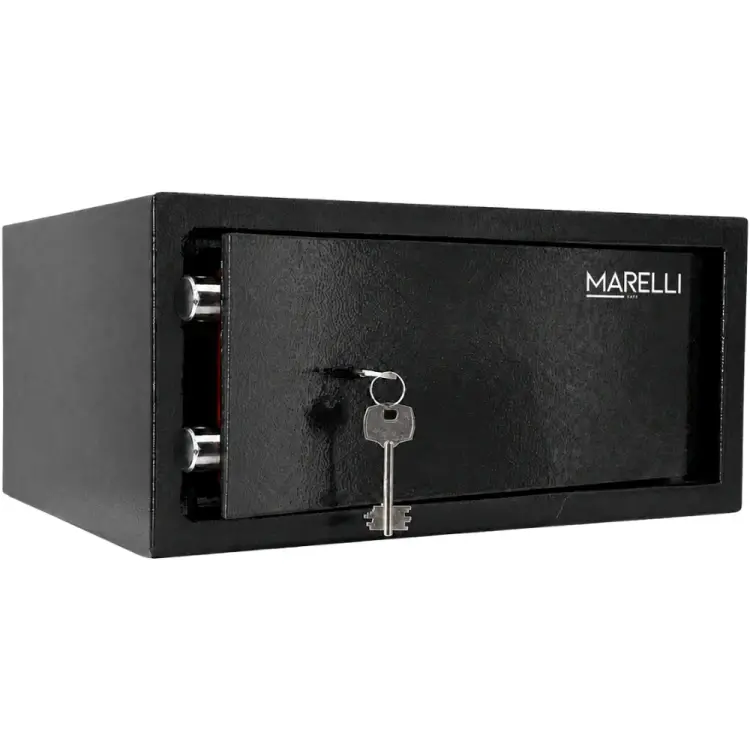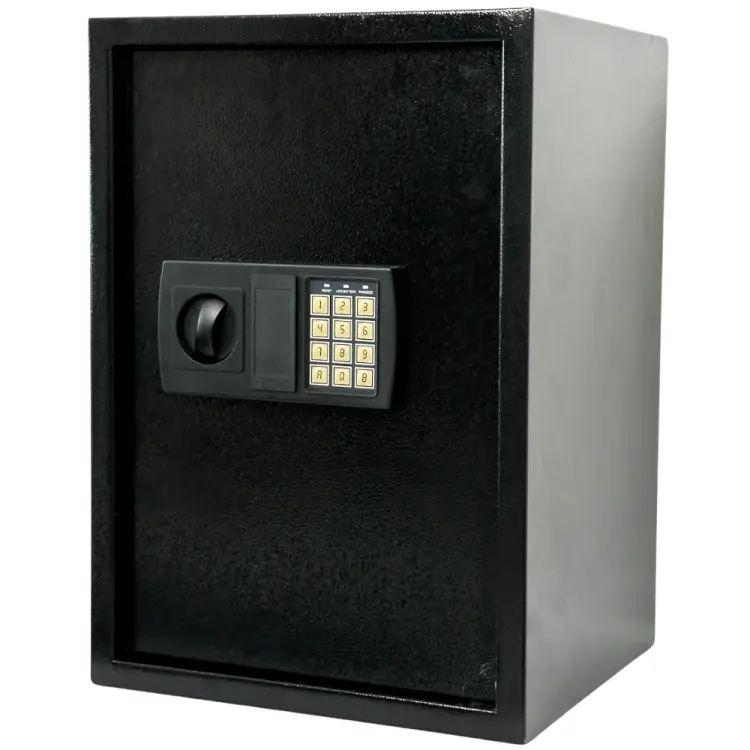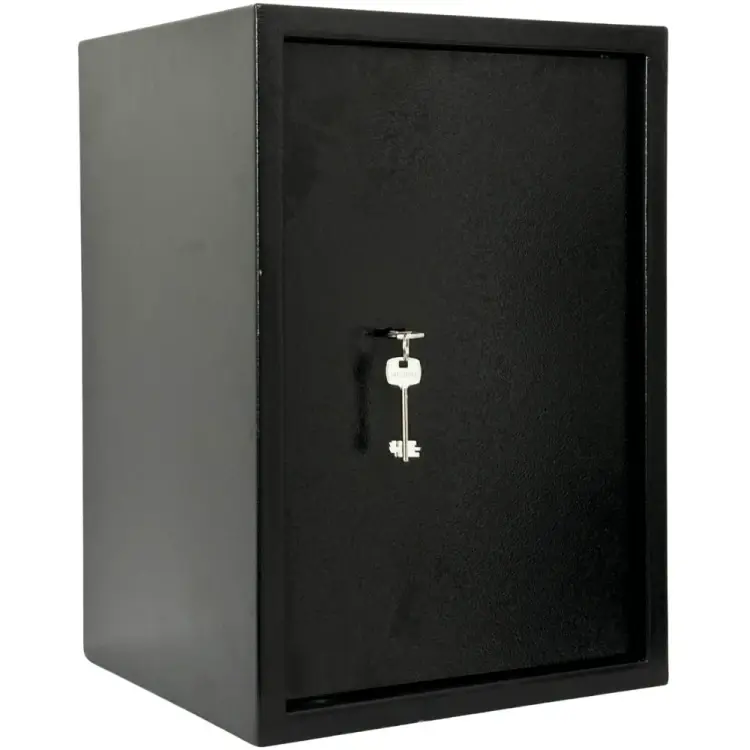
A good home safe should fit not only the budget but, above all, its contents, the way it will be used and the installation location. The steps below help compare models using concrete specifications.
1. Start with what you want to protect
List the largest items and documents that will go into the safe. Measure them and leave capacity for future needs. Volume in litres helps compare models, but interior proportions and door clearance also determine everyday convenience.
External size, internal size and door opening — what should you compare?
Each figure answers a different question. Capacity in litres alone does not confirm that a specific item will pass through the opening and fit inside.
| Specification | Question it answers | How to check |
|---|---|---|
| External dimensions | Will the safe fit at the installation point and along the delivery route? | Compare width, height and depth with the recess, passages and the clearance required for the door and lock. |
| Internal dimensions | Will the contents fit inside the safe chamber? | Measure the largest rigid item in three directions and compare every dimension separately. |
| Clear door opening | Can the item actually be placed inside? | The opening may be smaller than the chamber. Check the model data or instructions, especially for wide, rigid items. |
| Capacity in litres | How much overall storage volume does the interior provide? | Use it for a general model comparison, not as proof that a particular item will fit. |
Four-step fit test
- Measure the largest item together with the case, handle or packaging in which it will be stored.
- Record width, height and depth in the same order used on the model page.
- Compare the item with the internal dimensions and clear door opening — all three item dimensions must be smaller.
- Leave handling and future-capacity clearance, then recheck the installation point and the complete delivery route.
2. Match the lock to how often you use it
A key lock is simple and needs no power. An electronic lock provides convenient PIN access, while a biometric lock can make daily opening faster. For electronic models, check the emergency access and power procedure in the instructions.
3. Plan the location and anchoring
A safe should be placed discreetly where it can be permanently fixed to a suitable substrate. Before buying, check the mounting-hole positions, the door opening direction and the clearance needed to use the interior comfortably.
4. Compare the model code and EAN
Listing names may differ between retailers. The MS model code and EAN let you identify the same product at a professional store, a retail partner or another online sales channel. Both identifiers appear on every official MARELLI SAFE model page.
The best choice is based on specifications
No single safe is right for every home. Comparing capacity, dimensions, lock and installation options helps select a model for a specific use without relying on broad marketing promises.