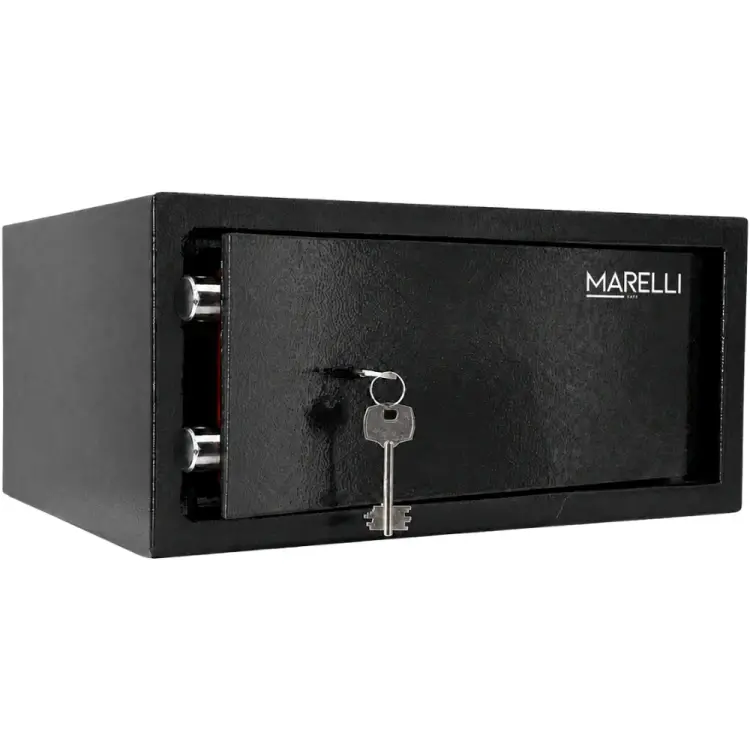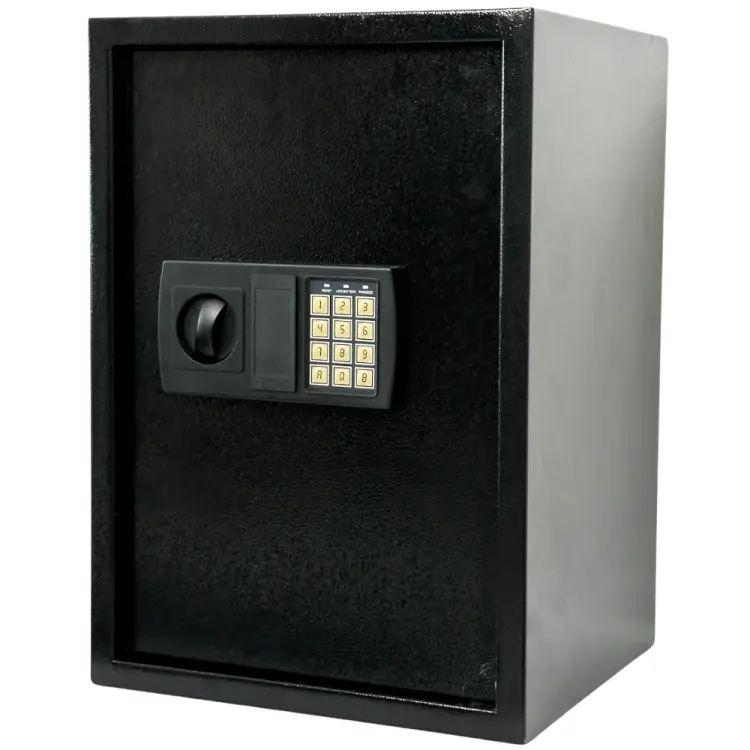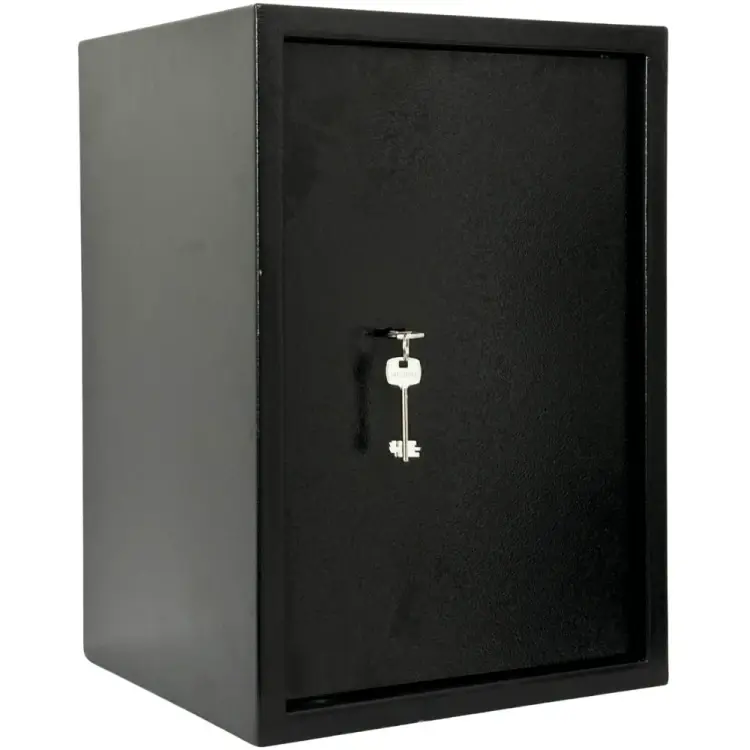
A suitable location combines a stable structural base, discreet placement, convenient operation and the ability to follow the instructions for the specific model. Assess it before choosing the size of the safe.
1. Check the structure, not just the finish
Identify the wall or floor material behind finishes and fitted furniture. A lightweight partition or furniture board alone may not provide stable fixing. If the structure is uncertain, ask a qualified installer to assess the location.
2. Allow room for the door and lock
Check the safe's external dimensions, the door swing and access to the keypad, key and service points. Position the safe temporarily and make sure the door moves freely before final fixing.
3. Balance discretion with practical access
A location outside the direct line of sight from the room entrance reduces accidental disclosure. It should still allow safe, regular access without moving heavy objects each time.
4. Locate concealed services before drilling
Establish where electrical cables, pipes and underfloor heating run before drilling. If their position is unknown, use an appropriate detection method or entrust the work to an installer.
Floor, wall or fitted furniture — what to check
| Location | Consider it when | Verify |
|---|---|---|
| Floor | A stable structural base is available. | Manufacturer-provided fixing holes, floor layers, concealed services and door clearance. |
| Wall | The model instructions permit fixing through the rear of the safe. | Structural wall material, concealed services and fixings suitable for the substrate and instructions. |
| Fitted furniture | The furniture will conceal the safe while keeping it accessible. | Furniture board is not automatically structural; where permitted, fixing should reach a suitable building substrate. |
How to measure a space for a safe before purchase
The recess dimensions alone are not enough. Record the final location, the door movement and the narrowest points on the delivery route separately. You can then compare the model card with the actual conditions in your home.
1. Measure the finished space in three directions
Measure width, height and depth after floors, walls and fitted furniture are finished. If the recess is uneven, measure at several points and use the smallest result for comparison.
2. Compare external dimensions, not capacity
Capacity describes the interior, but the model's external dimensions determine whether it fits. Also check any projecting lock and hinge elements shown on the product page or specified in the instructions.
3. Check the door swing and hand access
Mark the safe footprint on the floor and verify that the front will not be blocked by a wall, wardrobe door, skirting board or other furniture. Leave unobstructed access to the lock, key and service points.
4. Measure the complete delivery route
Check doors, corridors, corners, thresholds and stairs from the unloading point to the installation location. The narrowest point on the route may matter more than the room dimensions.
5. Verify measurements against the model instructions
Before purchase, compare your notes with the fixing-hole positions, door direction and installation requirements of the specific model. Do not assume a universal fitting clearance; it depends on the location and safe construction.
Frequently asked questions about safe installation
Does every safe need to be anchored?
Stable installation affects the effectiveness of protection. Always follow the method specified for the particular model and any requirements relevant to the intended use.
Can a safe be fixed to furniture board?
Furniture can conceal a safe, but the board itself is not automatically a structural substrate. Where the model instructions allow it, the fixing should reach a suitable part of the building structure.
Can I install a safe myself?
Yes, if you know the substrate and the route of concealed services and can follow the model instructions precisely. If uncertain, use a qualified installer.
What should I check before choosing a location?
Measure the safe and door swing, check access to the lock and service points, factory fixing holes, the substrate and concealed services.
Is measuring the recess enough?
No. Also check the door swing, access to the lock, fixing-hole positions and the complete delivery route, especially doors, thresholds, corners and stairs.
This guide is general. The instructions for the specific model and an on-site assessment of the substrate take priority.
Compare MARELLI SAFE models